Glycosylation, sulfation and phosphorylation (of proteins) represent functions of which cell organelle?
 Loading ...
Subscribe below to receive the DAT Question of the Day delivered straight to your inbox every morning.
Glycosylation, sulfation and phosphorylation (of proteins) represent functions of which cell organelle?
Loading ...
Which of the following is the chemical released by activated cytotoxic T-cells to fight a viral infection?
Loading ...
The human respiratory rate is regulated by chemoreceptors that monitor which of the following?
Loading ...
There are 5 white, 7 red and 8 black balls in a box. If you are blindly picking up balls from the box, what is the minimum number of balls you need to take out of the box to ensure that you have at least 2 balls of the same color?
Loading ...
Which one of the following reactions of alkenes does the Anti-Markovnikov’s rule apply instead of Markovnikov’s rule?
Loading ...
One of the tanks that a pediatric dentist uses to administer nitrous oxide is “empty”, meaning that the N2O inside is at the same temperature and pressure as the room. The ML-6 type cylinder has an internal volume of 165 liters. How many moles of nitrous oxide remain in the empty tank (Ideal gas constant = 0.082 L atm/K mol; assume the apparatus is at sea level; the ambient temperature is 22° C)?
Loading ...
Photo attributed to Jurvetson.
Which of the following is a specialized type of fungi that lives on the roots of many vascular plants and enables nutrient absorption?
Loading ...
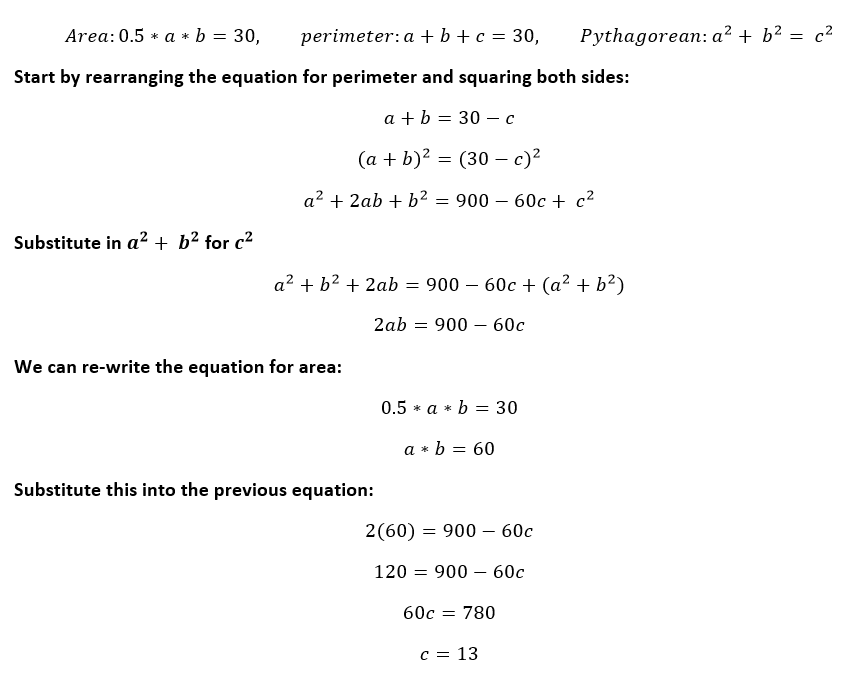
If the area and perimeter of a right triangle are 30 cm2 and 30 cm, respectively, what is the length of the hypotenuse (the side opposite the right angle)?
Loading ...
The absorption of what type of electromagnetic radiation results in electronic transitions?
Loading ...
Photo attributed to melburnian.
In a reaction between Mg and Ar, which of the following is most likely to occur?
Loading ...

(352) 340 - 3476

team@bootcamp.com
© 2026 DAT Question of the Day. All Rights Reserved.
Terms of Service | Privacy Policy | Disclaimer | Sitemap